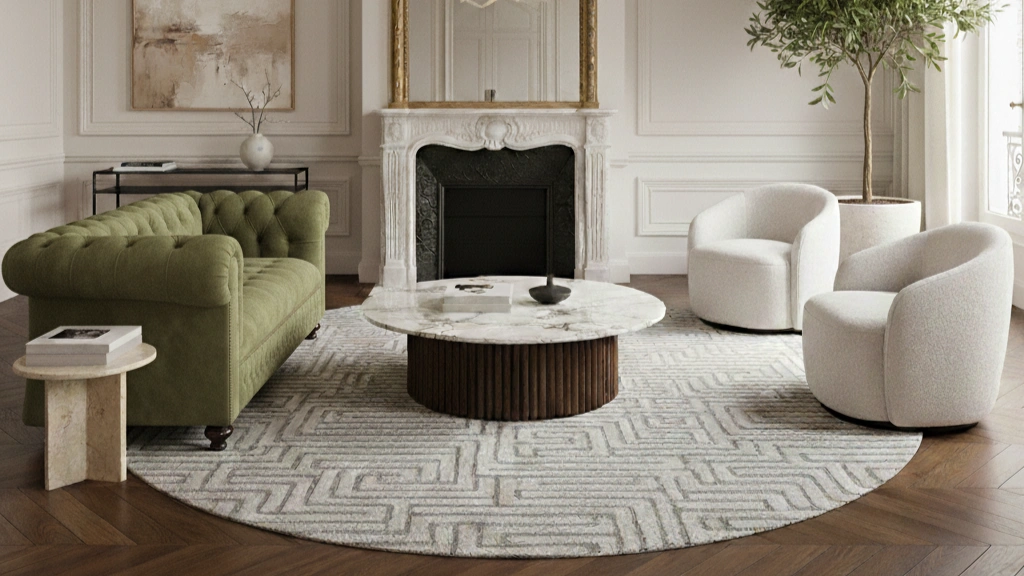
The Content Frequency Formula: How Luxury Showrooms Cut Photography Costs by 80% While Posting 10x More
 Amanda Mao
The Question Every Interiors Brand Owner Asks:
"How are our competitors posting beautiful lifestyle content every single day when we can barely afford one professional shoot per quarter?"
The answer isn't a bigger budget. It's a smarter system.
Traditional photography is the heartbeat of a luxury brand's visual identity—and there is no replacement for the artist's eye in "Hero" shots. But here's what changed in 2026: London's most successful showrooms realized that Hero shots alone can't sustain a digital presence when competitors are posting fresh, aspirational content daily.
The new challenge isn't just quality—it's frequency at scale.
The "Content Gap" Problem
Most high-end showrooms operate on a "Burst & Fade" cycle:
The Burst: A major seasonal shoot (Spring/Autumn) produces 50 beautiful images.
The Fade: Over the next 3 months, those 50 images are used, reused, and eventually exhausted on Instagram.
The Result: Engagement drops by 40% in the weeks leading up to the next shoot because the content feels stale.
This is the Content Gap. Bridging it with traditional photography is logistically impossible for most mid-sized brands.
The Math of Traditional Frequency
If you wanted to post 5 unique, high-end lifestyle images per week for a year:
Total Images Needed: 260
Traditional Cost (at ~£150/image package rate): £39,000 per year
Traditional Logistics: 5–8 full studio days, transport for 50+ items of furniture, and months of creative coordination.
Solving for ROI: The Hybrid Calculation
By adopting an AI-First frequency strategy, you don't replace your photographer; you empower your marketing team to fill the gap.
The ROI Switch
Metric | Traditional (High Volume) | AI Hybrid (Clara) |
|---|---|---|
Annual Core Spend | £39,000 (260 images) | £7,200 (£6k Hero + £1.2k AI) |
Content Variety | Limited to the set | Infinite (all room styles) |
Speed to Market | 3-week lead time | 30 seconds |
Social Engagement | Declines between shoots | Stays high (fresh daily) |
The result: You spend 80% less money while producing 10x more content.
Deep Dive: The Content Calendar Math
For a showroom at Notting Hill, a typical "Hybrid" month looks like this:
Use Case: The 30-Day Batch Workflow
Instead of one single "Hero" shot being posted 5 times, a Hybrid showroom uses AI to create a Variety Burst from a single product photo.
Platform | Traditional Method | Hybrid (Clara) Method |
|---|---|---|
Week 1 | One room set (Modern) | Day 1: London Townhouse set |
Week 2 | Close-ups of same set | Day 8: Minimalist set |
Week 3 | Repost of Week 1 | Day 15: Seasonal holiday theme |
Week 4 | "Sale" graphic | Day 22: High-impact lifestyle shot |
By "recycling" the same product photo through different light and architectures, your social grid stays fresh, aspirational, and high-energy—without ever repeating the same environment.
"But Won't AI Cheapen Our Brand?"
The short answer: Not if you use it correctly.
The long answer: Photoshop didn’t cheapen luxury brands. Instagram didn’t cheapen luxury brands. E-commerce didn’t cheapen luxury brands.
Used poorly, any tool can look cheap. Used strategically, it increases reach without diluting value.
Your brand isn’t cheapened when you show your £3,000 sofa in six beautifully curated environments. It’s cheapened when your content becomes repetitive, outdated, or invisible.
AI is not the creative director. It’s the production assistant.
Your photographer still shoots the hero campaign — the flagship imagery, the emotional anchor, the brand-defining moments.
AI fills the gap between campaigns. It extends the life of your assets. It allows you to stay present, contextual, and aspirational without organising a new shoot every month.
Luxury is about perception and consistency — not about how the pixels were generated.
Technical Deep Dive: The "Integrity of Light"
The biggest pain point in virtual décor is “floating furniture” — pieces that look like stickers pasted onto a photo, or worse, like an entirely different product. This lack of realism is one of the key reasons high-end brands were slow to adopt early AI solutions.
In 2026, with the right models and fine-tuning, AI can preserve true product consistency. By applying specialised techniques that lock in visual identity and brand details, it closes the long-standing “consistency gap” in generative AI.
When you place your sofa into a showroom scene with Clara, the AI doesn’t simply “cut and paste” it into a new background. It analyses the Global Illumination of your chosen new room (e.g., a Notting Hill flat with large windows) and:
Recasts Shadows: It determines where the sunlight from those sash windows would hit your velvet sofa.
Harmonizes Reflections: If there's a polished floor in the loft, it adds a digital reflection of your sofa that matches the wood's grain.
Matches Kelvin Temperature: It shifts the colour profile of your product to match the warm evening glow or cool morning light of the scene.
Aligns Perspective & Scale Automatically: No manual warping required. For example, when replacing a white sofa in a Notting Hill flat with a 2D image of a Chesterfield (see Image 1), Clara detects the room’s vanishing points and floor plane. It ensures the Chesterfield sits at precisely the correct depth, angle, and scale — as if it had always been there.
The result is delivered in under 30 seconds — a task that would typically require a professional 3D artist hours to achieve with comparable realism (see Image 2).
Image 1: Using Magic Placement to insert a Chesterfield sofa into a modern Notting Hill flat.
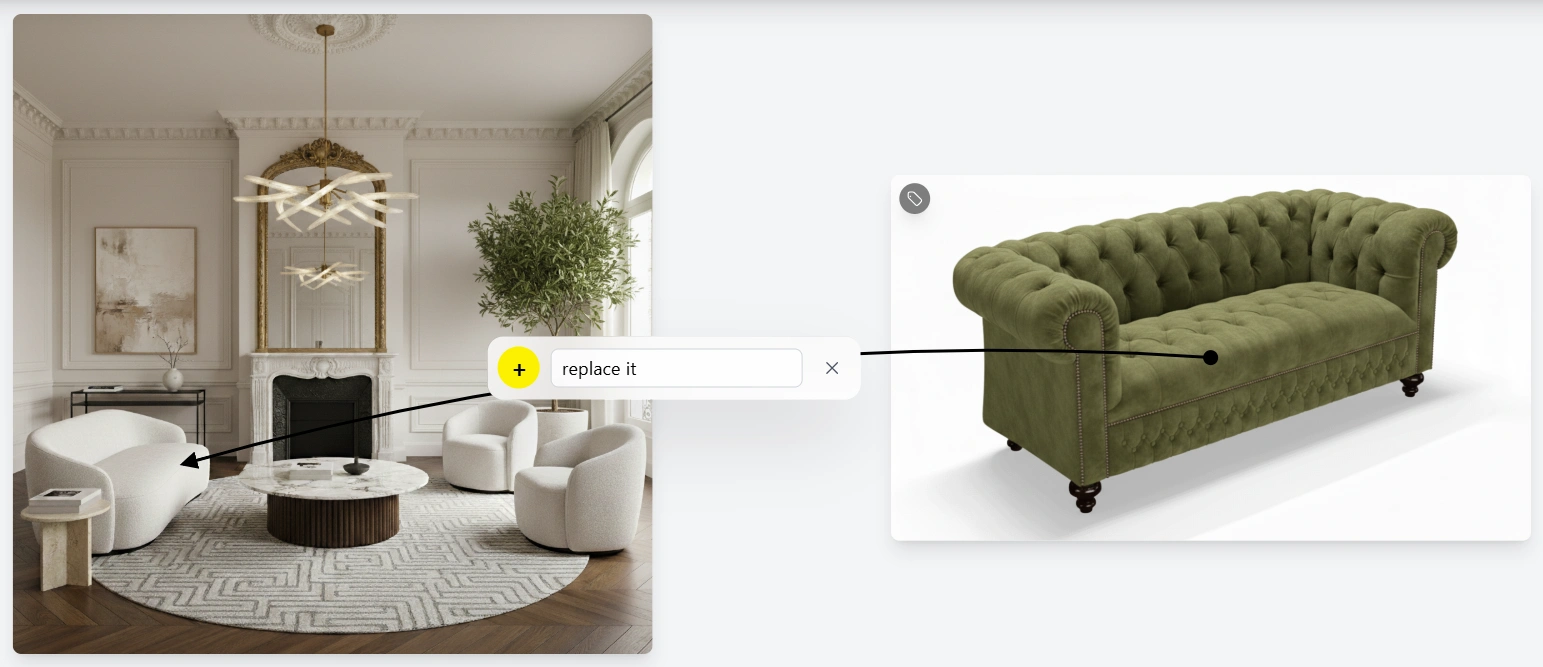
Image 2: From upload to fully integrated scene in just 30 seconds with Magic Placement.
[!TIP] High-end showrooms use the "Golden Hour" lighting setting in Clara to match the specific evening aesthetic of Westbourne Grove showrooms, creating a seamless transition between the physical and digital space.
The ROI of "Visual Closing"
The savings aren't just in the photography budget. They are in the Sales Velocity.
In the traditional model, a client leaves the showroom to "think about it" because they can't imagine the sofa in their home. In the Hybrid model, your sales team uses a tablet to show them that sofa in their room before they leave.
Result:
Photography ROI: 80% cost reduction compared to high-volume pro-shoots.
Sales ROI: 30% increase in on-the-spot closes as seen in our Chelsea Showroom pilot.
Social ROI: 150% increase in engagement due to environment variety.
Case Study: Notting Hill Showroom
Before Clara: 2 Instagram posts/week, 3.2% engagement rate
After Clara: 5 posts/week, 5.8% engagement rate (+81%)
Sales Impact: 12% increase in consultation-to-purchase conversion
Time Saved: 15 hours/month of creative coordination
For a full breakdown of how professional photography and AI coexist to protect your brand prestige, refer back to our blog [The Modern Showroom: How Interior Brands Sell More Without Expensive Photoshoots].
Ready to Test the Hybrid Model?
Most showrooms start with a simple 30-day pilot:
Week 1: Upload 5 existing product photos to Clara
Week 2: Generate 20 lifestyle variations across different room styles
Week 3: A/B test AI content vs. traditional reposts on Instagram
Week 4: Measure engagement lift and sales impact
No long-term contracts. No creative risk.
Frequently Asked Questions
Q: Can AI-generated images really match professional photography quality?
A: For hero campaigns and flagship launches, professional photography remains exceptional. It captures craftsmanship, texture, and detail with absolute precision — especially when showcasing signature pieces.
Where AI excels is in scalable, always-on content. It’s ideal for product lifestyle imagery on your website, daily social posts, email headers, paid ads, and in-showroom visualisation tools. Instead of waiting for the next major shoot, AI keeps your content pipeline full and your brand visually consistent between campaigns.
Think of it this way: professional photography sets the gold standard; AI multiplies it.
Q: Will customers know the images are AI-generated?
A: When done correctly, AI content maintains the same visual language as your brand. The key is using AI to place real product photos into different lifestyle settings, not generating furniture from scratch. Your sofa is still your sofa—just shown in a Parisian loft instead of a studio backdrop.
Q: How long does it take to create AI lifestyle images?
A: With Clara, generating a lifestyle variation takes approximately 30 seconds. Most showrooms batch-create a week's worth of content in under 30 minutes.
Q: Can I use AI content for paid advertising?
A: Absolutely. Many brands use AI-generated lifestyle shots for Meta ads, Google Shopping variants, and retargeting campaigns. The key is maintaining brand consistency and testing performance against traditional imagery.
Q: What if I need to show the product in a client's actual room?
A: Clara's product placement feature allows sales teams to upload a photo of a client's space and place your furniture in it within seconds—a powerful closing tool that traditional photography can't replicate.
Questions? Visit clara.genesiai.com